
Sep 24, 2026
How Do You Fix an Aluminium Skirting Board?
Fixing an aluminium skirting board involves cleaning the wall base thoroughly, measuring and cutting the profile to length, then securing it with construction adhesive, mechanical screws, or a clip-rail system depending on the substrate. For a clean finish, inside corners, outside corners, and end caps snap into place after the main lengths are set. The non-porous surface of an aluminium skirting board resists moisture and impact far better than wood or PVC alternatives, making correct initial installation especially worthwhile. Getting the fixing method right from the start prevents the most common field failures and extends service life significantly.
Understanding the Common Issues with Aluminium Skirting Boards
When installation is rushed, even a high-quality aluminium profile may not work as well as it should. Finding out why things go wrong saves both your budget and your project schedule.
Detachment, Misalignment, and Surface Damage
Detachment is almost always caused by a poorly prepared surface. If there is dust, moisture, or paint left on the wall face, the glue can't stick properly. Skipping a chalk-line guide before fixing usually leads to misalignment. Most surface dents or scratches in anodised coats happen during handling, not use. That's why the way the aluminium skirting board is packed for transport and how it is stored on-site are just as important as the profile itself.
Corrosion and Long-Term Wear
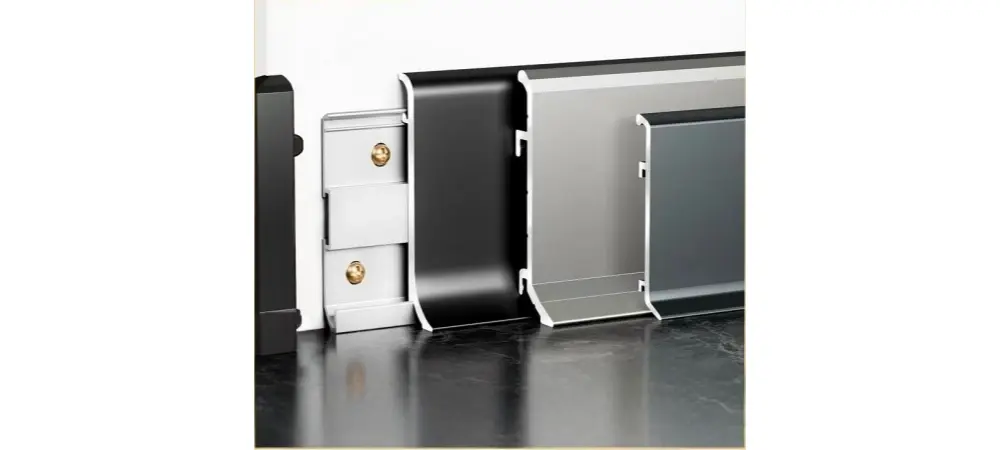
Aluminium has an inactive oxide layer that forms on its own, but low-grade metals or thin anodising (below 10 µm) can rust over time in damp business settings. This problem is solved by a profile made to 6063-T5 specifications that has an anodised layer of ≥10 μm, like the ZX Minimalist Aluminium Skirting Board. The vast majority of long-term performance complaints in commercial fit-out projects can be solved by using the right alloy grade and installing it correctly.

Step-by-Step Guide to Fixing Aluminium Skirting Boards
A strict construction procedure cuts down on extra work and keeps big projects on schedule. The steps below work for both a single-floor showroom and a commercial building with several floors.
Get your desk and things ready. For this project, you will need a spirit level, a chalk line, a notched glue spreader, a drill with brick bits, and your fitting tools, such as end caps, inside corners, and outside corners. Before you put any glue on the wall, make sure it is dry, flat, and free of any dirt.
Here are the main ways that commercial applications fix things:
- Adhesive bonding works well on painted walls or tiled surfaces that are flat. Apply a neutral-cure construction glue in a continuous bead along the back channel of the profile. Press down hard and hold with masking tape for as long as the adhesive maker says it needs to cure, which is usually 24 hours at room temperature.
- Mechanical fastening works with both brickwork and concrete. Drill holes in the wall every 400–600 mm, insert plastic plugs, and drive stainless steel screws through the mounting flange of the profile. Make sure the screw head is flush with the countersink so that the decorative face fits flush against the wall.
- Clip-rail systems are the fastest way to add a lot of things at once. First, a base track is screwed to the wall. The aluminium skirting board then snaps onto the track and can be taken off to clean or replace it without damaging the wall, which is very helpful in healthcare settings.
After putting it together, run a spirit level along the whole length to make sure that each corner connection fits flush. Use a damp cloth to wipe the profile clean of any adhesive left over before it hardens.
The full range of industrial surfaces and project sizes can be used with these methods. If you take the right steps from the start, you can escape the extra costs of changes that drive up fit-out budgets.
Comparing Aluminium Skirting Board Fixing Methods with Alternatives
Knowing the important differences helps purchasing teams choose the right product and guess what the real total cost of ownership will be.
Wood skirting needs to be nailed or glued in place, and it can grow termites and mould in damp places because it expands and contracts with the humidity. PVC is lighter and cheaper at first, but it gets dents easily, changes colour when exposed to UV light, and its glue bond weakens in hot places like business restaurants.
These problems are easily fixed by aluminium skirting boards. The 6063-T5 alloy in ZX's Minimalist Aluminium Skirting Board stays the same size at high and low temperatures and has a Class A1 non-combustible fire rating, which is something that wood and PVC can't do. The Aluminium Association says that 6063-T5 extrusions keep their shape from -40°C to 150°C, which covers almost all built-environment situations [1].
Lifecycle cost analyses by expert facilities managers constantly show that aluminium's longer service life and low maintenance needs make it a better choice than lower upfront cost alternatives [2]. This means that B2B buyers who manage portfolios with multiple sites will save money on hiring new workers and buying materials.
Procurement Considerations When Ordering Aluminium Skirting Boards and Fixing Services
Going beyond unit price is part of smart buying. For commercial and export buyers, the following things are the most important when looking for an aluminium skirting board supplier:
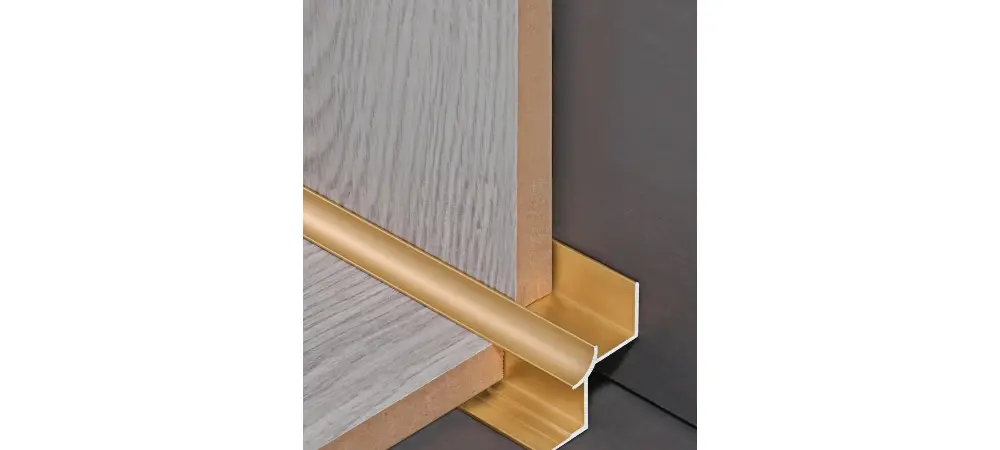
- Complete accessory availability: If a profile doesn't have matched inside corners, outside corners, and end caps, site teams have to make joints by hand, which costs more and looks bad. ZX comes with a full set of accessories by default.
- Dimensional tolerance and batch consistency: For commercial projects with multiple deliveries, the colour must be the same across batches with a Delta E value of less than 1.0. Every time ZX makes something, a spectrophotometer is used to check this.
- Certification documentation: People who want to export need CE, RoHS, and E0 environmental reports in order to get their goods through customs. In the U.S., healthcare and school projects may also need fire rating paperwork. If you ask, ZX will give them to you.
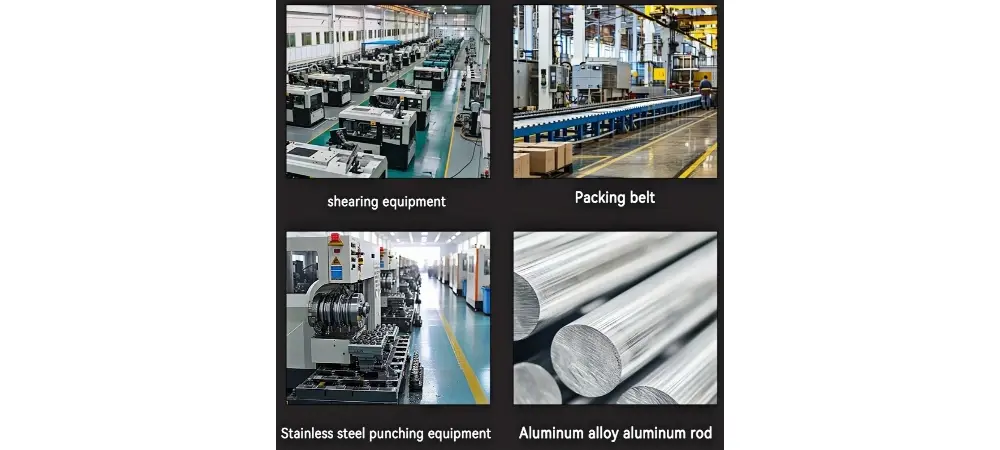
- Lead time reliability: Most orders are sent out within 7–10 days from ZX's factory in Zhengzhou, thanks to a transportation system that links directly to the country's main ports.
All of these things together show if a dealer can keep working with you for a long time instead of just filling one-time orders.
Maintenance and Cleaning Tips to Preserve Fixing Integrity
Aluminium skirting boards are one of the least-maintenance types of lining, but a simple practice will keep the surfaces clean and the fixings tight for the whole product's life.
Once a month, use a soft cloth wet with a pH-neutral detergent solution to wipe the area clean. If you don't want to damage the anodised layer, don't use rough pads or cleaners with solvents. Over time, this will make it less resistant to corrosion. If chemical disinfectants are used often in business kitchens or hospital hallways, make sure the cleaning agent is safe for anodised metal. Most hospital-grade quaternary ammonium disinfectants are safe [3].
Check the fixings every six months. Press along the length of each run to find any parts that are no longer stuck to the wall. The same neutral-cure construction adhesive that was used for the installation can be used to re-glue loose sections back together. If a mechanical fastener comes loose in a brick substrate, you should change the plastic plug with an anchor with a bigger diameter before driving the screw again. If you catch these small problems early, they won't get worse and cause damage to the structure and appearance that needs to be fixed.
Conclusion
Whether you use adhesive bonding, mechanical fastening, or a clip-rail system to attach an aluminium skirting board correctly determines how well the profile works over years of commercial use. Aluminium is the best material for challenging settings because it is stable in size, has a Class A1 fire rating, and has a non-porous, clean surface. When you use the right installation method and keep up with regular maintenance, you protect both the fixing's look and its structural integrity. Buying from a company whose batches are consistently the same, whose accessories come with full sets, and whose paperwork you can trust gets rid of the buying risk that can ruin even the best-planned project.
FAQ
1. When should I use professional installation rather than in-house labour?
If the job is longer than 500 linear metres, has complicated corner geometry, or needs to be proven to meet fire or hygiene standards, it's best to have a professional do the work. Fixing errors on a large scale costs a lot of money.
2. What adhesive works best for aluminium profiles on commercial substrates?
Neutral-cure silicone or MS-polymer construction adhesive sticks well to most commercial substrates and doesn't damage the anodised surface of the aluminium. So, stay away from acidic-cure silicones. They give off acetic acid, which can stain or weaken the finish over time.
3. How does aluminium compare to PVC for ongoing maintenance in high-traffic areas?
In high-traffic areas, aluminium stays hard on top and the same colour for a much longer time than PVC. PVC gets soft in direct sunlight and changes colour when heated for a long time, so it needs to be replaced about twice as often as a good aluminium skirting board.
4. Can I order custom heights or colours for a large project?
Yes, ZX's Minimalist Aluminium Skirting Board comes in 40mm, 60mm, and 80mm heights and 0.8mm, 1.0mm, and 1.2mm thicknesses. It can be anodised in black, silver, gold, or custom colours, and OEM is possible.
Partner With ZX for Reliable Aluminium Skirting Board Solutions
ZX offers factory-direct supplies of aluminium skirting boards that have been checked for accuracy in size, come with all the necessary accessories, and come with export paperwork ready for projects in the U.S. and other countries. Our minimalist aluminium skirting board ships in 7–10 days and comes with a 30-year warranty on colour consistency from batch to batch. You can email our team at info@kangdishi.com or visit zhongxiudecor.com to see all of our products and ask for samples or talk about your unique project needs.
References
1. The Aluminium Association. (2023). Aluminium Alloy Temper Designation System and Properties of 6063-T5 Extrusions. The Aluminium Association. https://www.aluminum.org/aluminum-advantage/aluminum-alloys
2. BSRIA. (2022). Whole Life Costing for Building Components: A Practical Guide. BSRIA Ltd. https://www.bsria.com/uk/product/guides/whole-life-costing-for-building-components-BG67-2022/
3. Centers for Disease Control and Prevention. (2023). Chemical Disinfectants: Guideline for Disinfection and Sterilisation in Healthcare Facilities. CDC. https://www.cdc.gov/infection-control/hcp/disinfection-sterilization/chemical-disinfectants.html
4. ASTM International. (2021). ASTM B580: Standard Specification for Anodic Oxide Coatings on Aluminium. ASTM International. https://www.astm.org/b0580-79r21.html
5. International Building Code (IBC). (2021). Chapter 8: Interior Finishes – Fire Classification Requirements. International Code Council. https://codes.iccsafe.org/content/IBC2021P1/chapter-8-interior-finishes
6. Construction Specifications Institute (CSI). (2022). MasterFormat Section 09 22 16: Non-Structural Metal Framing and Trim Installation Standards. CSI. https://www.csiresources.org/standards/masterformat
Online Message