
Sep 21, 2026
How Quick-Install Wall Panels Transform Interior Design Without Demolition or Long Renovation Times
Traditional interior renovation has long meant weeks of noise, dust, and disrupted operations. Quick-install wall panels are changing that reality. Engineered from bamboo fibre, PVC, and WPC composites, these modular cladding systems click into place directly over existing surfaces — no demolition, no wet work, no 30-day curing period. For renovation contractors, building material distributors, and commercial operators alike, this technology compresses project timelines by over 40% while delivering a finish quality that rivals conventional wall treatments. The result is a smarter, cleaner path to transformed interiors.
Understanding Quick-Install Wall Panels and Their Advantages
Modern modular quick-install wall panels represent a genuine engineering leap rather than a cosmetic shortcut. Where traditional wall finishing relies on plaster, adhesive tile, or multi-coat paint systems — each demanding sequential drying stages — prefabricated interlocking panels relocate nearly 90% of the production process to a controlled factory environment. The outcome on-site is predictable, fast, and clean.
Material Composition and Certifications
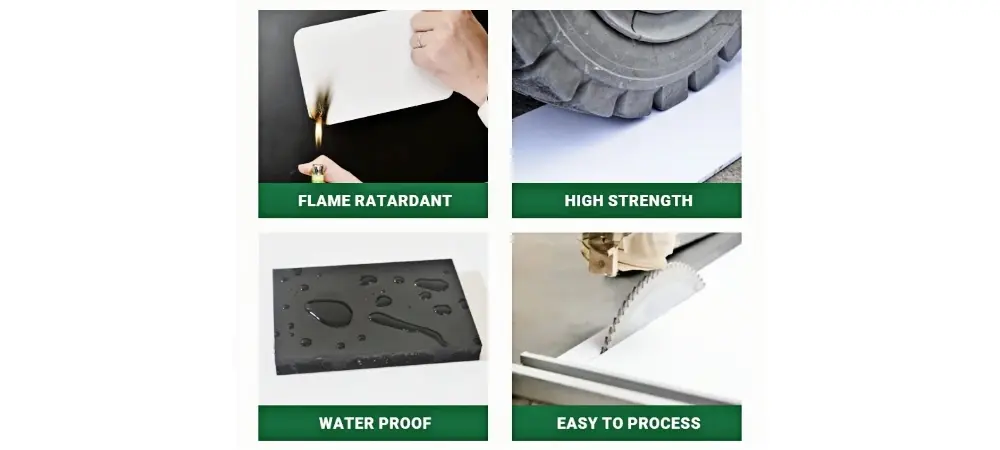
Zhengzhou Zhongxiu Building Materials Co., Ltd. (ZX) produces panels with a composite core of bamboo fibre, PVC, and WPC. These systems feature a density range of 0.8–1.2 g/cm³ and a Shore D hardness exceeding 70. Formaldehyde emissions reach the E0 level (below 0.05 mg/m³), and flame retardancy meets B1 grade under standard building codes. CE and RoHS certifications validate compliance for export markets spanning North America, Europe, the Middle East, and Southeast Asia. Under standard indoor conditions, the service life extends 15–20 years without warping or delamination.
Core Performance Advantages
The non-porous construction of these panels prevents capillary moisture absorption — a critical differentiator for bathrooms, basements, and coastal installations where conventional drywall fails within years. Here are the defining performance advantages buyers consistently cite:
- Zero base treatment required: Panels install directly over intact existing substrates, eliminating scraping, skim-coating, and primer application. On-site labour costs drop by approximately 30%.
- Click-lock joint precision: Tongue-and-groove tolerances held to ±0.05mm produce seamless alignment that visually matches natural stone or timber without the associated weight or maintenance.
- Impact and mould resistance: The composite structure resists physical collision and microbial growth, maintaining surface integrity in high-traffic corridors, retail environments, and humid zones.
- Acoustic dampening: Panel assemblies deliver up to 20dB of sound reduction, a meaningful benefit for hospitality and healthcare renovations.
These advantages collectively solve the three most persistent pain points in commercial refurbishment: excessive labour dependency, prolonged downtime, and post-installation VOC exposure.
Step-by-Step Quick-Install Wall Panel Installation Guide for Commercial Projects
Site Assessment and Panel Selection
Before any quick-install wall panel touches a wall, the substrate needs a basic integrity check. Surfaces with deflection greater than 5 mm variance benefit from a light-gauge steel or timber furring strip system to create a level plane. For sound substrates, installation proceeds immediately. Panel thickness selection — ranging from 6 mm to 12 mm in ZX's standard range — should reflect the ambient humidity level and design specification of the space. Width is standardised at 1.22 m, with lengths from 2.4 m to 4 m, and custom dimensions are available for non-standard layouts.
Installation Sequence and Post-Installation Care
A single installer can complete panel assembly without adhesive or specialised equipment. Panels slot together via the click-lock mechanism, with trim profiles—including edge strips, corner beads, and joining strips—completing the perimeter detailing cleanly. An expansion gap of 2–3 mm at corners or every 6–8 metres accommodates thermal movement without visible joint separation. Post-installation maintenance requires only damp wiping; no repainting, resealing, or grout replacement is needed across the panel's lifespan.
Comparing Quick-Install Wall Panels to Traditional Wall Solutions for B2B Clients
The performance gap between modular quick-install wall panels and conventional finishes becomes most visible at the project economics level. Traditional plaster and paint systems require sequential trades — demolition crew, plasterer, painter — with mandatory drying periods between each stage. A standard room renovation following this process routinely extends beyond 30 days, during which commercial spaces remain non-operational and revenue is lost.
Modular cladding panels collapse that timeline dramatically. A hotel chain completing a floor-by-floor room upgrade without closing the property represents the clearest commercial case: rooms re-enter service within 48 hours of panel installation rather than 30–60 days. Retail fitouts achieve full shopfront transformations within a single working weekend. For renovation contractors managing multiple simultaneous projects, the ability to field a single-person installation crew — rather than coordinating multi-trade teams — directly improves margin and throughput.
Durability comparisons also favour composite panels in demanding settings. Unlike ceramic tile, which cracks under impact and requires grout maintenance, or natural wood, which swells and warps under humidity, WPC and bamboo-fibre composites maintain dimensional stability across temperature and moisture fluctuations. The linear thermal expansion coefficient remains below 0.1%, ensuring joints stay tight across seasons.
How to Choose the Right Quick-Install Wall Panel Supplier and Products
Choosing a quick-install wall panel supplier carries more weight than product specification alone. A manufacturer's ability to hold colour consistency across production batches matters as much as the panel's technical ratings — especially for multi-floor hotel renovations or franchise retail rollouts where visual uniformity is non-negotiable.
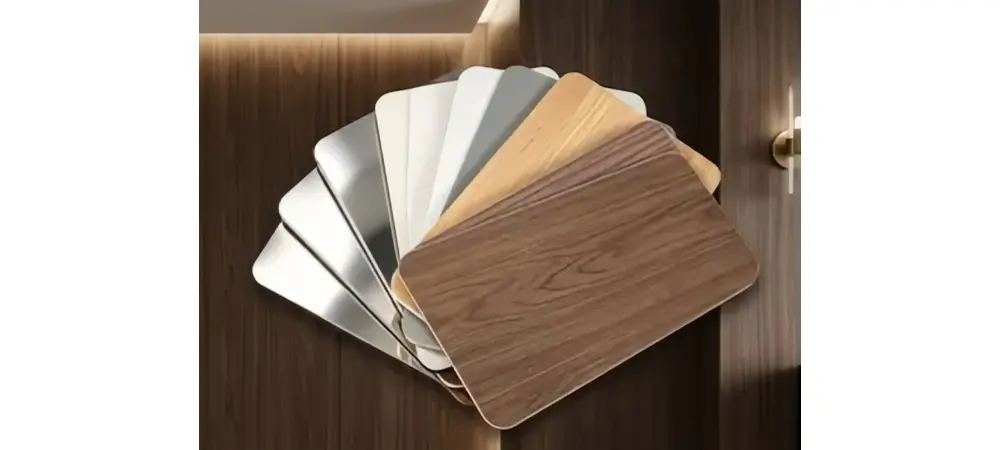
Procurement teams should evaluate suppliers against four practical criteria. Inventory depth determines whether hot-selling finishes remain available mid-project. Production lead time — ZX's standard is 7–10 days for stocked items and 10–15 days for custom specifications — determines whether urgent project needs can be met without delays. Batch colour consistency should be verified through greyscale testing at level 4 or higher. OEM capability allows renovation contractors and chain operators to specify proprietary finishes that reinforce brand identity across locations.
ZX's manufacturing infrastructure supports all four criteria: 300+ dedicated moulds, 200+ surface finishes spanning wood grain, stone grain, and solid colours, and a dual-layer quality control protocol covering five production benchmarks from dimensional accuracy through xenon arc UV ageing simulation.
Case Studies: Transforming Interior Design with Quick-Install Wall Panels
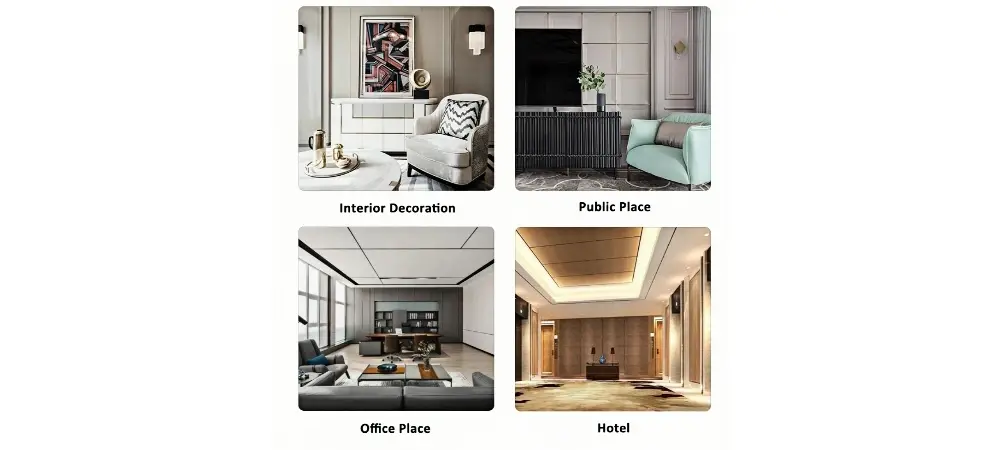
A mid-scale hotel group managing 200 rooms across three properties used quick-install wall panels to complete a phased room refresh without a single day of property closure. Installers worked floor by floor during low-occupancy windows, completing each room in under four hours. The B1 fire-rated, E0-certified panels satisfied both the fire marshal's requirements and the general manager's demand for immediate guest occupancy after installation.
A retail chain operating 80 shopfronts across two countries standardised its interior refresh specification around a single wood-grain modular panel in a custom OEM colour. Factory pre-cutting to store-specific dimensions eliminated on-site waste and cut per-store installation time from three days to one. The seamless surface also eliminated the grout-line cleaning that had been a recurring maintenance cost under the previous tile specification.
A residential renovation contractor in a dense urban market shifted entirely to no-base-treatment wall panels for old apartment refits. By eliminating the substrate preparation phase, the team increased monthly project throughput by approximately 35% without adding headcount.
Conclusion
Modular quick-install wall panels have matured from a niche workaround into a credible standard for commercial and residential renovation. The engineering logic is straightforward: factory precision replaces on-site uncertainty, click-lock assembly replaces multi-trade sequencing, and composite materials replace substrates that fail under moisture and impact. For procurement professionals evaluating renovation materials, the relevant question is no longer whether prefabricated panels can match traditional finishes — it is how much time and labour cost is being left on the table by not adopting them. ZX's product range, certifications, and supply chain infrastructure position it as a reliable partner for contractors and distributors ready to move at project pace.
FAQ
1. Can these panels be installed over existing tiles or damaged walls?
Quick-install wall panels can be put directly on top of structurally sound surfaces, including existing tile. Where surface variance exceeds 5 mm, a furring strip framework creates the required level plane. Damaged areas with compromised adhesion should be stabilised before panel application to prevent long-term movement behind the assembly.
2. How do composite wall panels perform against fire codes?
ZX panels carry B1-grade flame retardancy, meaning they meet non-flammable classification under standard building codes. Full fire performance documentation—including test reports—is available upon request to support building permit submissions and fire marshal inspections.
3. What are typical lead times for bulk custom orders?
Standard stocked finishes ship within 7–10 days. Custom sizes and proprietary colour specifications enter priority production and typically ship within 10–15 days. Large-volume orders receive expedited scheduling, and ZX's logistics team handles complete export documentation for international shipments.
5. Are the panels safe for immediate occupancy after installation?
Yes. E0-level formaldehyde emissions (below 0.05 mg/m³) and zero VOC off-gassing mean spaces are safe for immediate use following installation — a critical requirement for hotel room turnovers and residential renovations where re-occupancy speed matters.
Partner with ZX for Your Next Renovation Project
Zhengzhou Zhongxiu Building Materials Co., Ltd. (ZX) supplies factory-direct quick-install wall panels with 7–10 day standard lead times, 200+ surface finishes, and full CE, RoHS, and ISO 9001:2015 certifications. Whether you are a renovation contractor scaling project throughput or a distributor building a high-margin wall cladding category, our team provides sample support, quantity calculation assistance, and OEM customisation. Contact us at info@kangdishi.com or visit zhongxiudecor.com to request samples and a project quotation.
References
1. Lü, W., & McNary, K. (2020). Durability of Wood-Plastic Composites in Outdoor Applications. Forest Products Journal, 70(1), 5–14.
2. U.S. Green Building Council. (2023). LEED Reference Guide for Building Design and Construction. USGBIC.
3. International Code Council. (2021). International Building Code (IBC) 2021 — Interior Finishes and Wall Assemblies. ICC.
4. American Hotel & Lodging Association. (2022). 2022 Lodging Industry Profile: Capital Expenditure and Renovation Trends. AHLA.
5. American Society for Testing and Materials. (2020). ASTM E84-20: Standard Test Method for Surface Burning Characteristics of Building Materials. ASTM International.
6. Construction Specifier Magazine. (2023). Modular Wall Cladding Systems: Procurement and Performance Standards for Commercial Interiors. The Construction Specifier.
Online Message