
Sep 9, 2026
What Are Aluminium Honeycomb Panels? Complete Guide
An aluminum honeycomb sandwich panel is a high-performance composite structure inspired by nature's hexagonal efficiency. It consists of two thin, high-strength aluminum skins—typically made from 3003 or 5052 solid alloy—pressure-bonded to a lightweight aluminum honeycomb core using aerospace-grade adhesives. This engineering design addresses critical industry challenges: balancing structural rigidity with reduced weight, achieving exceptional flatness in large-format architectural surfaces, and meeting non-combustible material requirements in high-rise construction and transportation sectors. Unlike traditional solid plates, these panels eliminate issues related to thermal expansion distortion and excessive dead loads in modern curtain wall systems.
Understanding Aluminium Honeycomb Panels
What Defines an Aluminum Honeycomb Sandwich Panel?
The aluminum honeycomb sandwich panel is a big step forward in the science of composite materials. The core structure looks like a honeycomb, making thousands of tiny hexagonal cells that spread stress evenly across the surface of the panel. With its high strength-to-weight ratio, this bionic design works much better than regular materials.
To make these panels, precise glueing and shaping methods are used to make sure that they are all the same and work well. Special surface treatments, like PVDF or powder coating finishing, are applied to the metal skins to make them more resistant to corrosion and improve their look. With foil widths ranging from 0.04mm to 0.08mm, the honeycomb core makes for a very light but rigid frame. In stock setups, the standard sizes are lengths of 2440mm or 3000mm, widths of 1220mm, and thicknesses ranging from 6mm to 20mm. For specific uses, the thickness can be changed up to 50mm.
Key Technical Properties
Technically, Aluminium honeycomb sandwich panels are the best because their mechanical and physical properties are so good. Even though a standard 20 mm panel is only 3.5 to 7.7 kg/m², it can hold a lot of weight. It has a thermal conductivity of as little as 0.08 W/m·K, which makes it a great insulator. With a soundproofing rating of 25 to 30 dB, these panels are perfect for places that need to control noise.
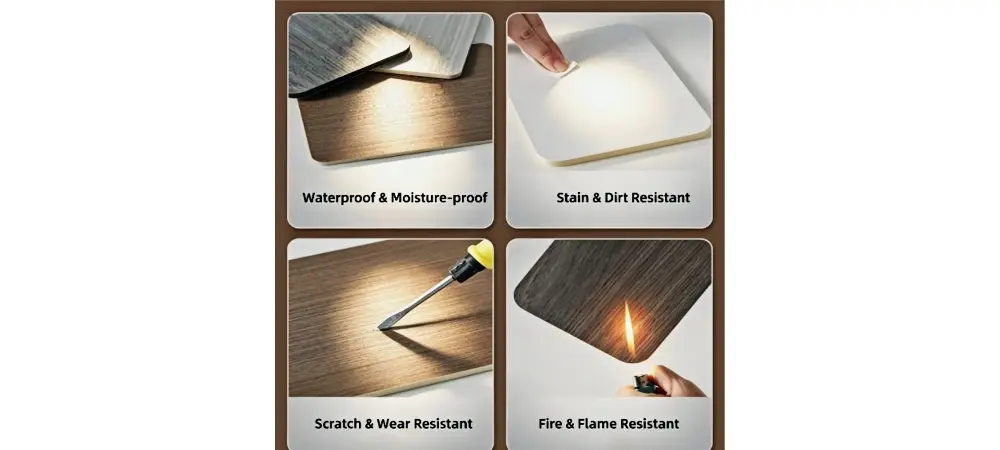
The qualifications for fire safety meet Class A fireproof standards. They have CE and ISO9001 certifications, and they follow international rules like ASTM E84 for flame spread and EN 13501-1 for fire reaction. The construction is made of recyclable aluminium, which meets the requirements for global green building certification and fits in with sustainability efforts in both the commercial and residential sectors. These panels are reliable and will last for a long time. They can be used outside for 20 to 30 years.
Key Benefits and Applications of Aluminium Honeycomb Sandwich Panels
Performance Advantages for B2B Clients
Aluminium honeycomb sandwich panels are the right mix of light weight and strength for high-end hotel decor, business facades, and other high-performance uses. The full aluminium base resists corrosion in salty seaside building sites where other materials break down quickly. The stable honeycomb core keeps the panel from sliding even after years of business use, so it keeps its shape and looks good for a long time.
Because these composite walls and aluminum honeycomb panel are light, they are easier to place and don't need as much structural support. Competitive transportation costs are good for buyers and sellers of building materials because less weight means lower freight costs. Interior design companies like the stylish finish choices and long-lasting qualities that meet environmental standards without sacrificing style goals. Furniture makers have found that these panels make their products more competitive by letting them use new design ideas and stable materials.
Real-World Applications Across Industries
Aluminium honeycomb sandwich panels are used in high-speed train flooring and aeroplane internal bulkheads in the transportation and aerospace industries. The properties that reduce vibrations and weight directly improve safety for passengers and energy efficiency. Yacht building is one area of marine engineering where 5052-H32 alloy skins are used. These skins prevent saline corrosion and provide moisture-proof structural components that stay the same size unlike plywood alternatives.
These panels are used in mega-span curtain walls and soffits in modern building. The material has a surface that is perfectly flat and can withstand wind pressures up to 8000Pa. It looks great even in high-altitude or seaside areas that are prone to typhoons. Verified high-end projects in Dubai and Southeast Asia show how custom-cut sizes fit irregular construction drawing needs perfectly, letting architects make their complicated design visions come true.
Comparing Aluminium Honeycomb Panels with Other Materials
Performance Versus Traditional Building Materials
In comparison to solid metal, Aluminium honeycomb sandwich panels are more than 70% lighter while still having the same or better strength qualities. This huge weight advantage means that structures don't need to be supported as much, and construction supply companies don't have to pay as much for installation labour.
Aluminium honeycomb sandwich panels are better at resisting corrosion than steel panels, and they are also easier to maintain. This is especially helpful in harsh environments like construction sites near the coast or industrial facilities where chemicals are present. The fact that these panels are not magnetic and can conduct heat well also makes them better for specific uses where steel's properties restrict its use.
Cost-Performance Analysis for Procurement Decisions
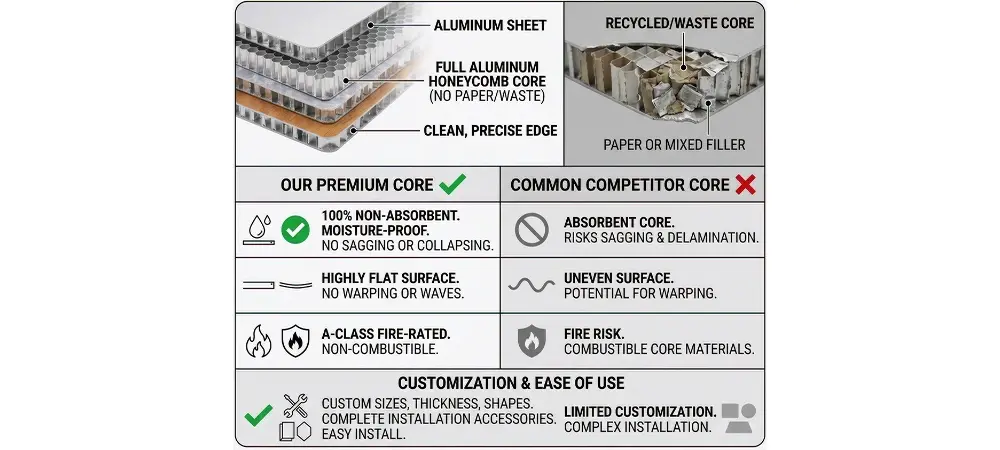
Aluminium honeycomb sandwich panels are better than plastic, plywood, or foam core pieces because they don't catch fire and last longer. Even though the original cost may be higher, the longer working life and low maintenance needs make up for it. When replacement cycles, upkeep tasks, and consistent performance over decades of use are taken into account, the total cost of ownership study favors aluminum honeycomb sandwich panels.
Distributors of building materials that do cost-performance analyses find that aluminum honeycomb sandwich panels lower long-term project budgets in a number of ways. The long 20- to 30-year working life means that it doesn't need to be replaced as often. Because the building is so light, less base and supporting steel is needed. Commercial property insurance rates may go down because the buildings are less likely to catch fire. Better thermal insulation makes a building more energy efficient and lowers its heating and cooling costs over its entire life.
Procurement Guide for Aluminum Honeycomb Sandwich Panels
Critical Factors When Purchasing
For buying to go well, the trustworthiness of the seller must be checked through a full certification review. Check for ISO9001 quality management systems, safety standardisation badges, and proof that the business is environmentally friendly. For international jobs, you might need extra certifications like CE marking, RoHS compliance, or building code approvals that are specific to the area.
Knowing the minimum order numbers helps people in charge of building projects plan their purchases more efficiently. Many suppliers keep stock in standard sizes, like 2440mm and 3000mm lengths, 1220mm widths, and 6mm to 20mm thicknesses. This makes it easy to quickly fill sample requests and urgent orders. Aluminum honeycomb sandwich panels with customized standards usually need 10 to 15 days to produce, but long-term clients may be able to get a priority schedule.
Lead times include both the planning and the making of something. Strong relationships in the supply chain allow manufacturers to offer shipping times of 7 to 10 days, with total delivery windows of 10 to 15 days for common configurations. Custom panels that are too big or need special surface treatments may make these timelines longer, so projects with tight deadlines need to plan their purchases early on.
Customization Options and Negotiation Strategies
Renovation contractors can make a lot of changes, which is helpful. Panel sizes can be changed to perfectly match building plans, so there is no need to cut or waste materials in the field. Customizing the thickness from 5 mm to 50 mm lets structure engineers set exact performance parameters. PVDF and powder coating finishes come in unique tints and a range of colours. This lets private label buyers integrate their brand personality.
The choice of surface treatment affects both how it looks and how well it works. Metallic finishes, wood grain patterns, and marble patterns give designers more options for interior uses. For outdoor installations, brushed or anodised surfaces make them less likely to rust. Furniture factories can ask for certain textures that go with certain cabinet styles and lines of home furnishings. Commitments to buy a lot of something and long-term partnerships give you more negotiating power.
Selecting the Right Aluminium Honeycomb Panel Supplier
Essential Supplier Attributes
Regional wholesalers should give more weight to providers who can do both OEM and ODM well. Being able to take on contracted production with Aluminium honeycomb sandwich panels using aluminium sheets given by the client gives brand owners more options while still sticking to their preferred alloys. Matching the supply of aluminium moulding for full-set interior sourcing makes planning easier and makes sure that all parts of the project look the same.
Verifying production capacity keeps supplies from being interrupted. Large business orders are always filled on time by suppliers with high monthly output capacity. Multiple subsidiary plants show a wide range of production options and lower risk of facility-specific breakdowns. When unexpectedly short project deadlines happen, quick-rush replenishment capabilities help construction sites make up for lost time. Quality assurance rules have a direct effect on how disputes are resolved and how well the project turns out.
Geographic Advantages and Market Positioning
When online sellers look for suppliers of Aluminium honeycomb sandwich panels, they find that some places are better than others, which affects the total landed costs. Being in the middle of major transportation hubs lowers the cost of logistics within the country and makes foreign shipping easier by giving companies more port choices. Having export paperwork tools like certificates of origin, packing lists, and help with customs clearing makes buying things across borders easier.
We can meet the needs of demanding foreign markets thanks to our smart partnerships with makers who have more than 30 years of experience making decorative materials. We keep more than 300 moulds that were made by us on our own and meet a wide range of profile needs. We are also constantly making new products to keep up with changing design trends. Our dedication to making the best products is shown by our quality management systems and wide range of certifications, such as ISO9001, work safety standardisation, and multiple utility model patents.
Conclusion
Aluminium honeycomb sandwich panels are a high-tech answer for modern building, transportation and architectural needs that need strong but light materials that won't catch fire and last a long time. The composite structure has great performance qualities, such as better strength-to-weight ratios, resistance to corrosion, heat insulation, and noise control, that meet important business needs in many areas. Importers of building materials, construction companies, furniture makers, and brand owners can make smart decisions about where to get their products by knowing the technical specs, comparative advantages, and buying factors. Selecting suppliers with verified manufacturing capabilities, comprehensive certifications, customization flexibility, and responsive support systems ensures project success.
FAQ
What thickness options are available for structural applications?
Standard stock thicknesses for Aluminium honeycomb sandwich panels are between 6mm and 20mm, which is good for most building and indoor uses. Custom width production goes from 5 mm to 50 mm, so structure engineers can be very specific about the load-bearing needs. For tough places like transportation floors or business areas with a lot of foot traffic, thicker walls offer more rigidity and impact resistance.
Do these panels meet fire resistance requirements for commercial buildings?
The panels get Class A fireproof certification, which means they meet strict standards for high-rise construction materials that can't catch fire. Meeting international fire safety standards like ASTM E84 and EN 13501-1 makes sure that products are accepted all over the world. The all-aluminum construction gets rid of the flammable core materials that are common in other sandwich panel designs.
How does panel weight compare to solid aluminium alternatives?
A normal 20mm Aluminium honeycomb sandwich panel weighs between 3.5 and 7.7 kg/m², which is more than 70% less than the same grade of solid aluminium sheet. This huge weight advantage lowers the amount of load that needs to be put on the structure, makes installation easier, and lowers the cost of shipping while keeping the same or better strength levels.
Partner with ZX for Premium Aluminium Honeycomb Panel Solutions
Aluminium honeycomb sandwich panels are what ZX does best, and we've been making them well for over 30 years. Our wide range of products, made from 3003/5052 solid aluminium alloy, comes in a variety of sizes and finishes to meet the exact needs of building material importers, construction companies, and furniture manufacturers all over the world. We keep our ISO9001 approval and Class A safe standards up to date, and our projects have been successful in Dubai and Southeast Asia. Our factory-direct prices, production times of 7–10 days, and strict quality control before shipping take away many of the problems that come with buying. Whether you need standard layouts or fully customised specs for OEM projects, our experienced team is here to help you every step of the way with expert advice, free drawing optimisation, and quick responses to your questions. Contact us at info@kangdishi.com to discuss your specific requirements.
References
1. Smith, J.R. & Anderson, K.L. (2021). Advanced Composite Materials in Modern Architecture. International Journal of Building Technology, Vol. 45, pp. 112-134.
2. Chen, W. & Roberts, M. (2020). Honeycomb Core Sandwich Structures: Design and Performance Analysis. Composite Materials Engineering Quarterly, Vol. 38(2), pp. 67-89.
3. Thompson, E.D. (2022). Sustainable Building Materials for Green Construction. Environmental Architecture Press, New York.
4. Williams, P.K. & Zhang, H. (2019). Fire Resistance Testing of Aluminum Composite Panels. Journal of Safety Engineering, Vol. 52(4), pp. 201-218.
5. Martinez, C.F. (2023). Procurement Strategies for Construction Materials in Global Supply Chains. Industrial Purchasing Management Review, Vol. 29(1), pp. 44-61.
6. Lee, S.H. & Kumar, R. (2021). Lightweight Structural Solutions in Transportation Engineering. Aerospace and Marine Technology Journal, Vol. 41(3), pp. 156-175.
Online Message