
Sep 29, 2026
What finish is best for aluminum corner trim?
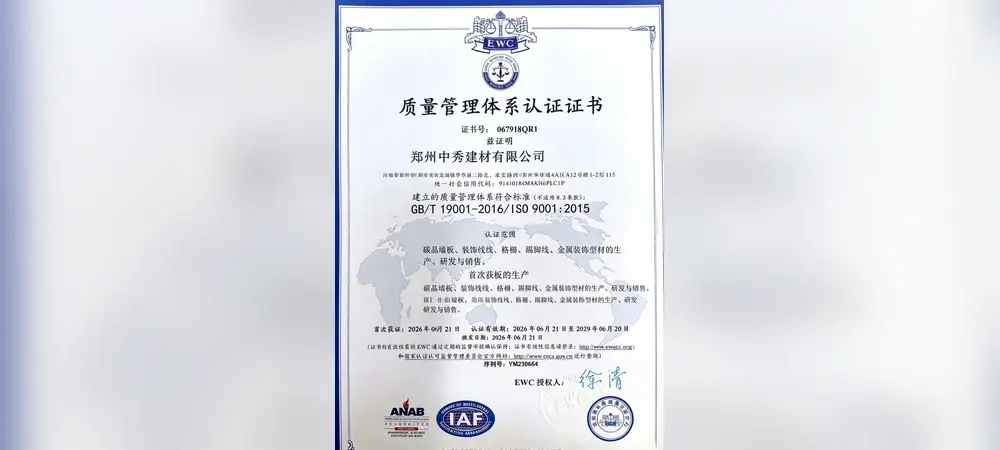
If you've ever sourced wall protection profiles for a commercial build or a residential renovation, you already know that the finish matters as much as the metal itself. The short answer: anodized and powder-coated finishes are the two strongest choices for most projects, and the right one depends on your environment, budget, and design requirements. Our aluminum corner wall trim — precision-extruded from hard anti-collision solid aluminum alloy in 5 mm and 8 mm thickness — is available in both treatments, giving wholesalers, contractors, and importers a single-source solution backed by CE and RoHS certification.
Understanding Aluminum Corner Trim Finishes
Raw (Mill) Finish
Aluminum with a mill finish leaves the extrusion machine without being treated on the outside. It costs the least up front, but in humid or coastal air, it breaks down quickly. Most procurement managers think it's only good for a short time or indoors, and only when the profile will be painted on-site.
Anodized Finish
Through an electrochemical process, anodizing changes the top layer of aluminum into aluminum oxide. A coat thickness of ≥10 µm, which is always reached by our plant, makes the surface very resistant to scratches and rust. ASTM B580 says that for outdoor use, architectural-grade anodizing should reach 18–25 µm. The finish is built into the metal, so it won't come off.
Powder-Coated Finish
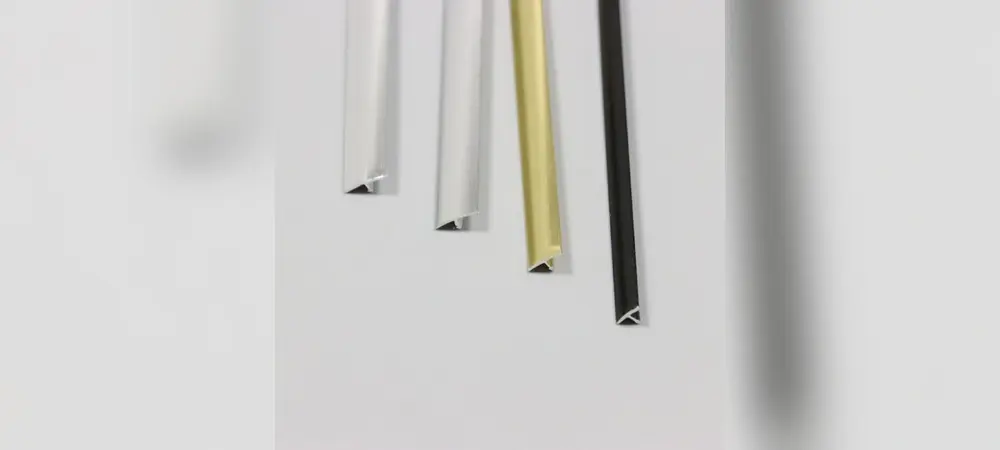
Powder coating on aluminum corner wall trim uses heat to stick a dry polymer film (usually 60–80 µm thick) to the shape. It comes in a lot of colors, like matte black, silver, champagne gold, and hundreds of unique shades. It is also very resistant to UV light. It is the standard for color-matched OEM production runs because it is easier to keep accuracy from batch to batch.
PVDF / Painted Finish
Polyvinylidene fluoride (PVDF) films are often used on curtain walls and high-rises along the coast. Their weather protection is better than normal internal wall trims, but they cost more per unit. This means they are better for architectural uses outside than inside.
Key Criteria to Consider When Choosing the Best Finish
Durability and Weather Resistance
A thicker protective layer is needed in coastal, tropical, or high-humidity areas. Anodized profiles with a film thickness of 10 µm or less pass a 240-hour neutral salt spray test (NSS), which is like being exposed to humidity for years. Powder-coated trims work just as well inside as they do outside in protected areas. In wet places like bathrooms and industrial kitchens, our waterproof metal corner profiles keep the structure strong without letting the surface wear down.
Aesthetic Alignment and Color Consistency
It is necessary to match the colors of hundreds of panels in full-service furniture factories and hotel fit-out projects. Powder painting makes it possible to precisely copy RAL or custom colors and lock in batch colors, which directly lowers the risk of noticeable color differences between orders. After every coating run, we do a high-intensity surface inspection as part of our production process.
Long-Term Maintenance and Total Cost
If you keep the aluminum corner wall trim's anodized finish in normal indoor settings for 22 to 30 years, all that needs to be done is a neutral-pH cleaning. Powder-coated finishes don't fade as quickly as regular paint, but they may need to be touched up in a few places if they get chipped during installation. Over a ten-year period, both finishes are better than raw or simply painted aluminum when lifecycle cost is taken into account.
Environmental Compliance
To sell your goods in the EU and many Middle Eastern areas, you need to have CE and RoHS approval. Both are on our profiles, and we provide all the paperwork needed for customs clearance, such as CO and Form E certificates. PVDF coatings are strong, but they contain fluoropolymers that some green building systems don't like. Anodizing, on the other hand, doesn't make any VOCs and is in line with LEED and other similar standards.
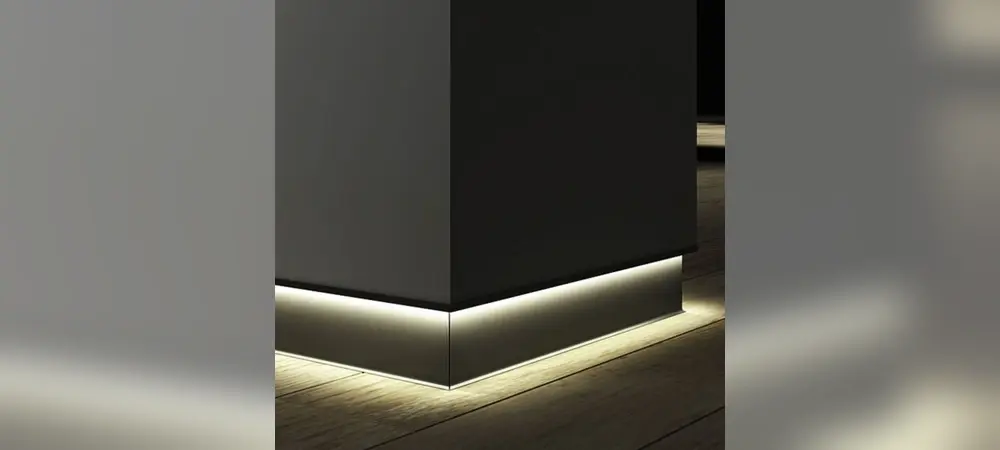
Comparing Popular Aluminum Corner Trim Finishes
This means that each finish has its own place in the market. Knowing these differences helps buyers match the right product to the right job without going over price or over specifications.
Powder Coating vs. Anodizing
Powder finishing wins for its wide range of colors and strong first impression. Anodizing is better for long-term rust protection and hardness of the surface, especially in humid places. Anodized profiles last longer in commercial areas with a lot of foot traffic where damage from bumps and scrapes is common. Powder coating is the standard for fully customized OEM cabinet lines where color accuracy is important for customer satisfaction.
Raw Aluminum vs. Painted Trims
In interior projects where the trim will be hidden or painted over, raw mill-finish profiles are a good way to save money. Painted trims look better, but they depend a lot on how well the primer sticks. Paint can blister in wet places within months. For any job that will be used for more than five years, neither properly anodized nor powder-coated shapes offer the best value for money.
Specialty Finishes for Industrial Applications
Food processing plants and drug factories need coatings that are resistant to chemicals or microbes. Some powder coats have antibacterial ingredients in them, and hard-coat anodizing (Type III) makes a surface that can't be cleaned with acids between pH 5 and 8. These specialized treatments are more expensive, but they are often required by cleanliness standards in the industry, so the specification can't be changed for those areas.
How to Select and Source the Best Finish for Your Project
A clear buying method cuts down on time wasted and avoids mistakes that cost a lot of money.First, decide whether the work will be indoors, outdoors, dry, wet, or in a standard business or heavy industrial setting. Match that to the finish level: anodized for areas that are likely to rust, powder-coated for projects that want to show off color, and PVDF for use as an outdoor curtain wall. Then check the supplier's records of tests. If you ask, a reputable aluminum corner trim manufacturer should be able to give you batch salt spray test reports, coating adhesion data (ASTM D3359 cross-hatch test), and third-party certifications.
If you're buying aluminum corner wall trim in bulk, make sure the supplier can lock color batches across multiple production runs. In the OEM furniture business, one of the most common complaints is that colors vary from batch to batch. Before signing an outline agreement, you should get samples of panels from two different production runs. At ZX, we send out samples quickly so that buyers can check the quality of the color and surface before committing to a large order. Lead time and logistics are both important. Standard orders from our Zhengzhou plant ship in 7–10 days. Custom or large orders take 10–15 days to finish. Standard length is 3,000 mm, but it can be cut on-site to 2.4–3 m, which cuts down on waste and makes installation easier in odd-shaped rooms.
Installation and Maintenance Insights for Different Finishes
Installation Best Practices
When cutting powder-coated features, use a high-tooth-count carbide blade made for metals that aren't iron. When you cut with the wrong blade, you create heat that can damage the metal edge. Always use masking tape to protect cut ends while moving and setting up. For anodized profiles, don't let alkaline mortar or grout touch the surface directly. The aluminum oxide layer is safe in normal pH levels, but it can etch in strong alkalis (pH > 9).
Maintenance Protocols by Finish Type
Anodized profiles only need to be cleaned with a soft cloth and a mild, neutral detergent every so often. Do not use pads that are rough. The same method can be used to clean powder-coated surfaces. To fix small chips, our factory sells touch-up paint pens that match the paint. A once-a-year check for tiny cracks or blisters on the surface of exterior-grade profiles helps find issues early on before they get worse.
Troubleshooting Common Issues
When powder-coated profiles fade, it's generally because the UV filters in the coating aren't up to par. For exterior-grade trims, list either the AAMA 2604 or AAMA 2605 powder coat requirements. If you see corrosion blistering on anodized edges near the coast, it means that the anodizing film was not thick enough—always ask for a proof of film thickness. Every batch of our production is checked for quality by making sure that the anodized film thickness is at least 10 µm.
Conclusion
There are three things that affect the choice of finish for metal corner trim: the service setting, the color and style needs, and the total budget for the product's lifetime. Anodized finishes are the best at keeping things from rusting and lasting a long time. When it comes to color flexibility and OEM color matching, powder coating is the best. If you need waterproof aluminum corner wall trim in a wet home or business place, either finish will work much better than raw or painted options. Before you buy in bulk, make sure the covering thickness data is correct, the batch samples are requested, and the certificates are checked.
FAQ
1. Which finish offers the best corrosion resistance for exterior installations?
Anodized finish with a film layer of ≥18 µm (per ASTM B580 architectural grade) is the best for outdoor use because it doesn't rust. PVDF paint can also be used on walls that get a lot of direct sunlight. Powder coating with a layer of 60–80 µm works well for outdoor uses that are protected.
2. Can powder-coated aluminum corner trim be color-matched to cabinet panels?
Yes. Powder painting can copy RAL colors or unique colors. For OEM furniture companies, we offer color-locked production runs and ship sample panels from two different batches for pre-approval. This lowers the chance that the colors will not match between orders.
3. How does finish type affect product lifespan in high-humidity spaces?
Anodized and powder-coated finishes last a lot longer than raw or painted metal in bathrooms, business kitchens, and other wet areas. We made sure that our metal corner profiles are waterproof, and they should last between 22 and 30 years in normal indoor circumstances.
4. What certifications should I verify before importing aluminum trim?
At the very least, ask for CE and RoHS certificates. For some markets, you may also need to see the salt spray test result, the anodised film thickness certificate, and proof that the profiles meet the Class B1 fire standard.
4. What is the minimum order quantity for custom-color profiles?
MOQ changes based on the type of finish and the level of complexity of the color. To be sure, please contact our sales team immediately. We work with importers and wholesalers on flexible order structures, such as small test runs before full-volume agreements.
Request Samples or a Quote from ZX — Aluminum Corner Wall Trim Supplier
ZX has a 132-mu manufacturing base and is backed by Zhengzhou Zhongxiu Building Materials Co., Ltd. They sell aluminum corner wall trim factory-direct at low prices in anodized, powder-coated, and custom finishes. We can help wholesalers and importers with everything from a trial sample to a bulk order. We have more than 300 molds, are CE and RoHS certified, and have a standard lead time of 7–10 days. To start your request right away, email your needs to info@kangdishi.com or go to zhongxiudecor.com.
References
1. American Architectural Manufacturers Association (AAMA). AAMA 2604 & 2605: Voluntary Specification for High Performance Organic Coatings on Aluminum Extrusions and Panels. AAMA, 2020.
2. ASTM International. ASTM B580: Standard Specification for Anodic Oxide Coatings on Aluminum. ASTM International, 2019.
3. ASTM International. ASTM B221: Standard Specification for Aluminum and Aluminum-Alloy Extruded Bars, Rods, Wire, Profiles, and Tubes. ASTM International, 2021.
4. Aluminum Association. Aluminum Design Manual: Specifications and Guidelines for Aluminum Structures. Aluminum Association, 2020.
5. U.S. Green Building Council. LEED v4.1 Building Design and Construction Reference Guide. USGBC, 2022.
6. Schweitzer, Philip A. Corrosion of Linings and Coatings: Cathodic and Inhibitor Protection and Corrosion Monitoring. CRC Press, 2007.
Online Message